The churches of Zurich
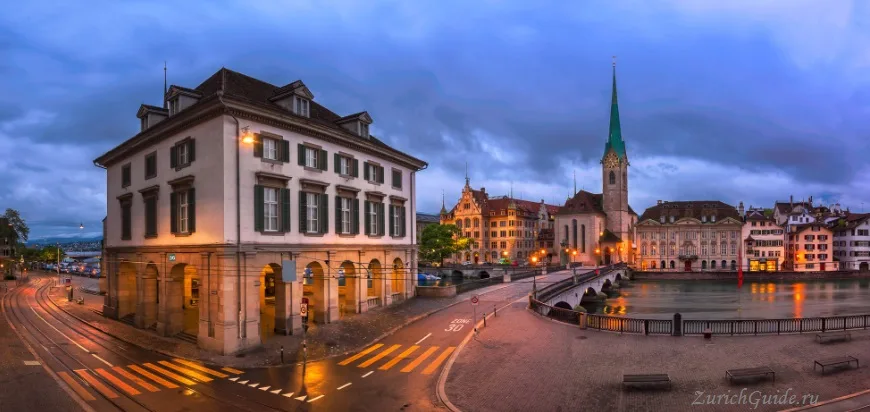
Three towers make the skyline, and each is worth going into for one specific thing: Chagall's windows, a tower climb, and the largest clock face in Europe.
Do not come for the decoration. Zurich was where Huldrych Zwingli launched the Swiss Reformation in the 1520s, and the reformers stripped the churches out — images removed, altars gone, organs dismantled, walls whitewashed. What is left is stone, proportion, light, and the occasional patch of medieval fresco that survived under the plaster.
Which turns out to be enough. The three main churches stand within five minutes of each other on either side of the Limmat, and each has one thing you cannot see anywhere else.
Grossmünster
_069.JPG)
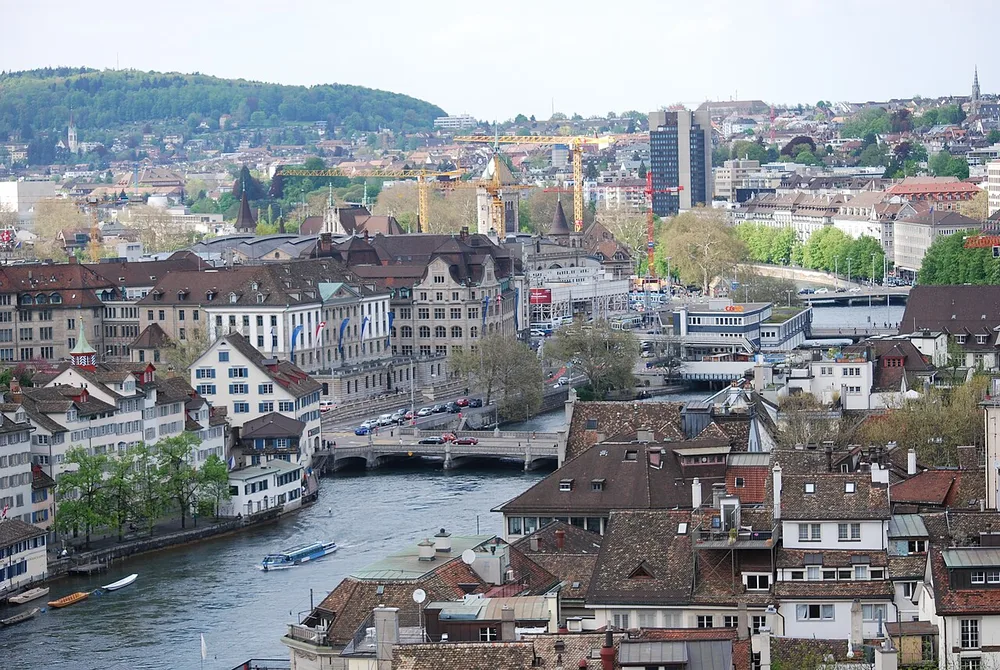
The twin towers are the symbol of the city. The Romanesque core went up from about 1100 and was in use by 1200, on a site that has produced Roman burials — which fits the legend that Charlemagne founded it when his horse knelt at the graves of Felix and Regula, the city’s patron saints. The story was useful: it gave the men’s minster precedence over the women’s abbey across the river, and the two competed all through the Middle Ages.
In the 1520s this was where Zwingli preached, and where the Swiss-German Reformation began. His successor Heinrich Bullinger carried it on for another forty years. The theological college attached to the minster eventually grew into the University of Zurich.
What to see inside: the Romanesque crypt with its oversized Charlemagne statue, the capitals in the cloister, the choir windows by Augusto Giacometti (1932), and the bronze doors by Otto Münch.
The tower climb is the reason most people come, and it is worth the stairs: the view takes in the Limmat, the old town roofs, the lake and the hills behind. There is a modest charge, and the last entry is well before closing.
The Reformation museum in the cloister is small and open on weekdays.
Fraumünster
Louis the German founded the abbey in 853 for his daughter Hildegard, as a house for the daughters of the southern German aristocracy. It became remarkably powerful: the abbesses held the right to mint Zurich’s coinage into the thirteenth century and in practice governed the city from 1045 until 1524, when the last abbess handed everything to the town council and the Reformation closed the abbey.
For centuries it was noted mainly for having one tower where the pattern called for two — the money ran out.
The Chagall windows
Then in 1970 Marc Chagall, aged 83, glazed the choir. He had been asked a year earlier and took his time deciding: five lancets, each a metre wide and ten metres tall, is an awkward shape for a narrative.
His solution was to run each window vertically as a single sweep and let the eye travel between them. The five are the Prophets, the Law (Moses with the tablets), Jacob, Zion, and Christ in the centre. Seven years later he added the rose window in the south transept — the Creation, in seven petals for seven days.
They are the reason the Fraumünster has queues and the Grossmünster does not. Go early. Photography inside is not allowed, which is why you will not find pictures of them here: Chagall died in 1985 and the windows remain in copyright.
Also worth a look on the way in: the cloister frescoes by Paul Bodmer, and the Romanesque choir behind Chagall’s glass.
St. Peter
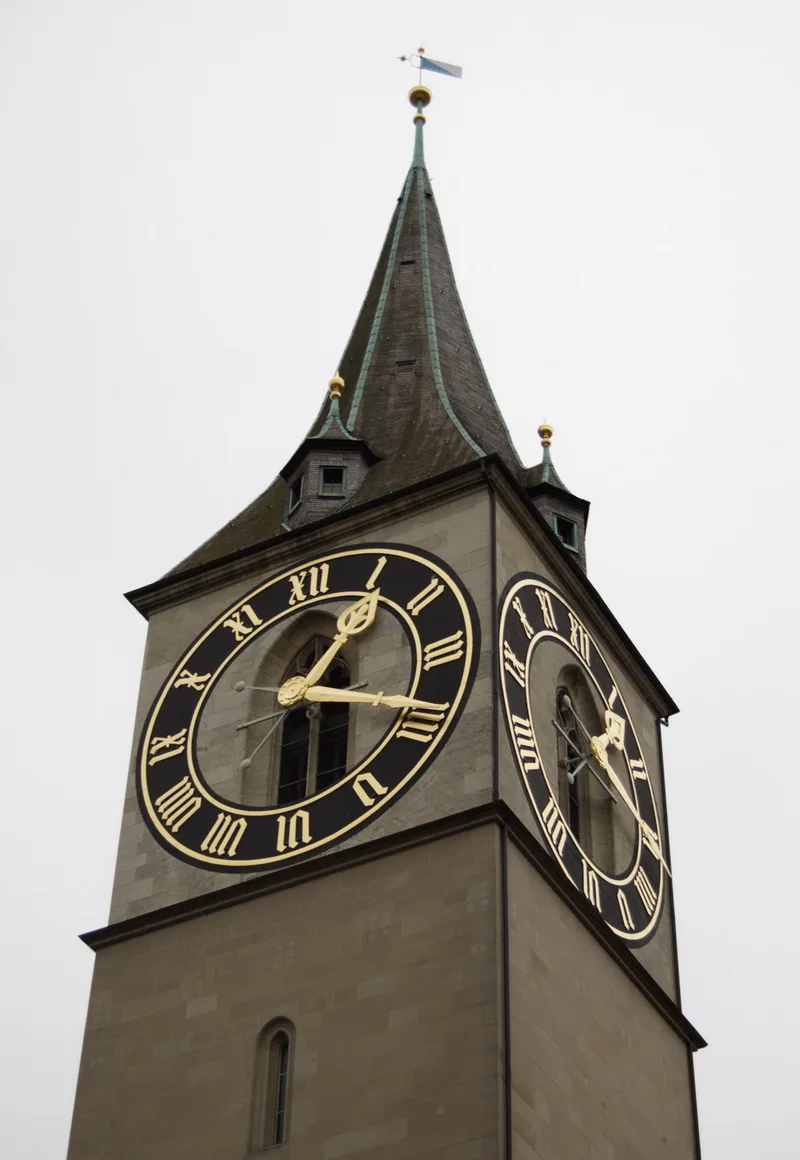

The oldest parish church in Zurich — first recorded in 857, when Louis the German gave it to one of his daughters — and the holder of a superlative that surprises people: the largest clock face in Europe, 8.7 m across, with a minute hand nearly four metres long. Installed in 1538. Not Big Ben, which is considerably smaller.
There is a practical reason it is so large. Until 1911 the tower was the city’s fire watch: a lookout lived up there, and on spotting a fire rang a signal and hung a flag out of the window facing the flames. The clock had to be readable from across the city.
The building underneath is a layer cake — traces of an eighth-century predecessor, a late-Romanesque choir from about 1230, a Gothic nave rebuilt in 1460, and a baroque nave consecrated in 1706 as the first purpose-built Protestant church in Zurich. The tower belongs to the city; the nave belongs to the parish.
Buried here: Rudolf Brun, the first independent mayor of Zurich, in 1360. Johann Caspar Lavater — physiognomist, poet, and a boyhood friend of Goethe — was pastor from 1778 to 1801 and has his gravestone set into the wall.
Finding it is the hard part: it hides in the lanes off Schlüsselgasse, and the tower is easier to navigate by than any map. Trams 4 and 15 to Rathaus or Helmhaus, or walk up from Paradeplatz.
The smaller ones
- Wasserkirche — a late-Gothic church built on the islet in the Limmat where Felix and Regula were said to have been executed. It was the city library for three centuries after the Reformation and is now a church again.
- Predigerkirche — the Dominican church in the old town, with the tallest Gothic choir in the city.
- Liebfrauenkirche — Roman Catholic, on Weinbergstrasse, open long hours and used for quiet midday prayer.
- St. Jakob at Stauffacher — German neo-Renaissance from 1901, built to hold 1,400 and until 1950 the largest Protestant parish in Switzerland. Organ recitals on the first Tuesday of the month.
- St. Peter und Paul at Werd — the first Catholic church built in post-Reformation Zurich, 1873–74, neo-Gothic and startling against the modern blocks around it.
- The Russian Orthodox church on Kinkelstrasse, near Haldenbach.
Practical
All three main churches are free to enter; the Grossmünster tower and the Fraumünster charge admission. Opening hours are shorter in winter and the churches close to visitors during services — Sunday mornings are the awkward time. Check the current hours on each church’s own site before making a special trip.
All three stand within five minutes of each other, which makes them the one sight that survives a short visit intact — see a few hours in Zurich if that is all the time you have.
Updated: