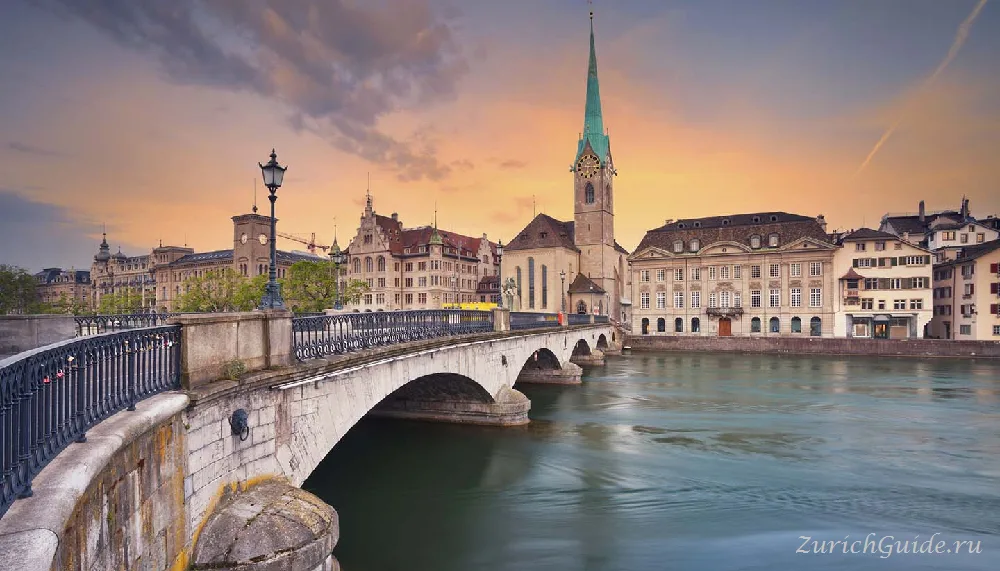
Zurich
Switzerland's largest city: a compact old town on a fast green river, a lake you can swim in from the middle of town, and the best public transport you will ever use.
Zurich has about 440,000 people in the city and 1.4 million in the wider agglomeration, which makes it large by Swiss standards and small by everyone else’s. You can walk across the middle of it in twenty minutes.
It sits near the top of the quality-of-life rankings and near the top of the cost-of-living ones, and both are immediately obvious. It is also less starched than its reputation: the banks are real, but so is the river swimming, and the nightlife runs later than in most German-speaking cities.
How the city is laid out
Three things, and once you see them the map makes sense.
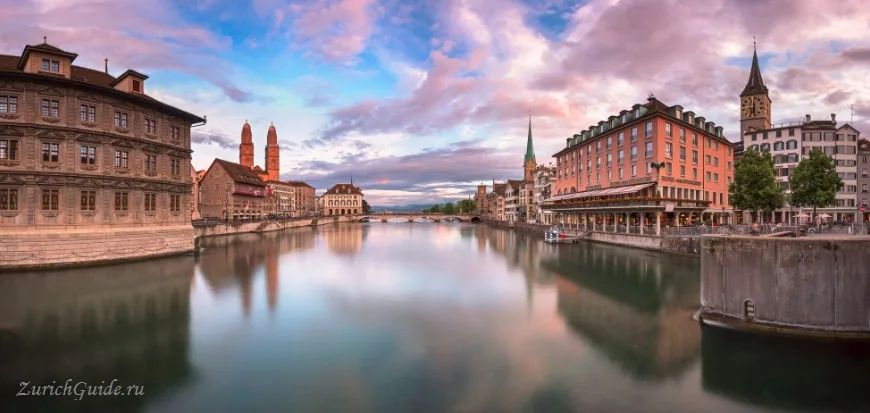
The Limmat. The river runs out of the lake through the middle of town, and the old town sits on both banks — Lindenhof and the Bahnhofstrasse side to the west, the Niederdorf lanes and the Grossmünster to the east. Almost everything worth seeing is within 500 m of the water.
The lake. Zürichsee begins at Bürkliplatz, at the bottom of the main shopping street, and runs 40 km south-east towards the mountains.
The hills. Uetliberg to the west, 870 m, with a train to the top and the view over the whole city. On a clear day the Alps close the horizon.
What to see
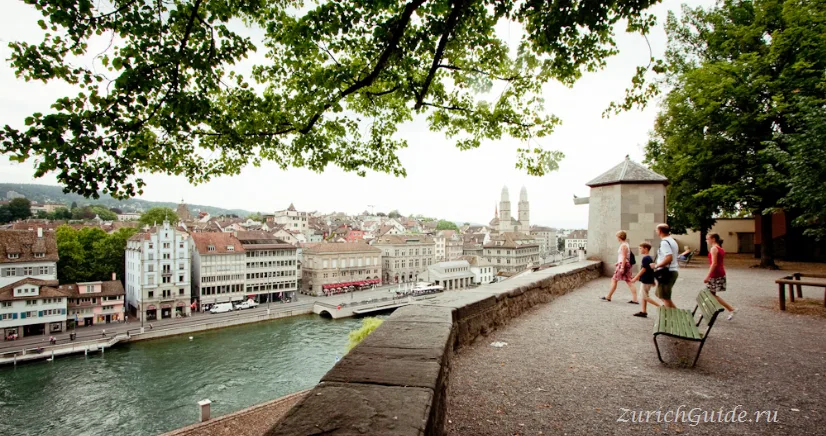
The old town
Lindenhof is where the Romans put their customs post and where you should start: a gravelled terrace under lime trees above the river, with old men playing chess and the best free view in the city.
East of the river, Niederdorf — usually just Dörfli — is the pedestrian half: narrow lanes, bars, and considerably more life after dark than the west bank.
Bahnhofstrasse runs from the main station to the lake and is one of the most expensive shopping streets in the world. Worth walking once, end to end; the interesting shops are on the side streets.
The churches
Three towers define the skyline, and each has a specific reason to go in: Chagall’s windows in the Fraumünster, the tower climb at the Grossmünster, and the largest clock face in Europe on St. Peter. See the churches of Zurich.
Museums
The Kunsthaus is the serious one — the largest Munch holding outside Norway, plus Giacometti, Hodler and a strong nineteenth century, in a building that doubled in size in 2021. The Landesmuseum, in the turreted pile behind the main station, covers the whole history of Switzerland and is far better than that sounds. The Rietberg holds non-European art, in a park south of the centre.
The lake and the river
Boats leave Bürkliplatz all year: short round trips of an hour and a half, and longer runs down the lake to Rapperswil, which has a castle and a wooden footbridge across the water.
In summer the real attraction is swimming. The city has a series of Badis — public baths built out over the water, several within a few minutes’ walk of the banks. Frauenbad Stadthausquai and Männerbad Schanzengraben are nineteenth-century wooden ones; Oberer Letten is a river swim where you get in upstream and let the current carry you down. The water is clean enough that this is normal rather than eccentric.
Getting around
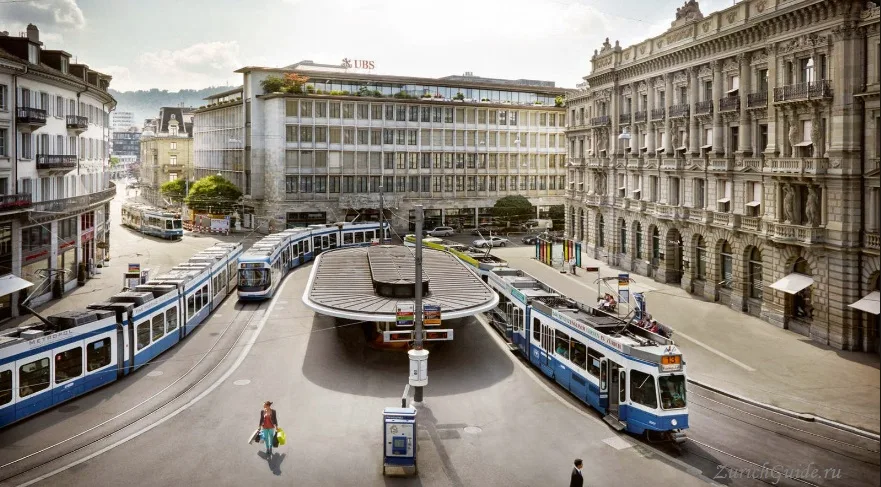
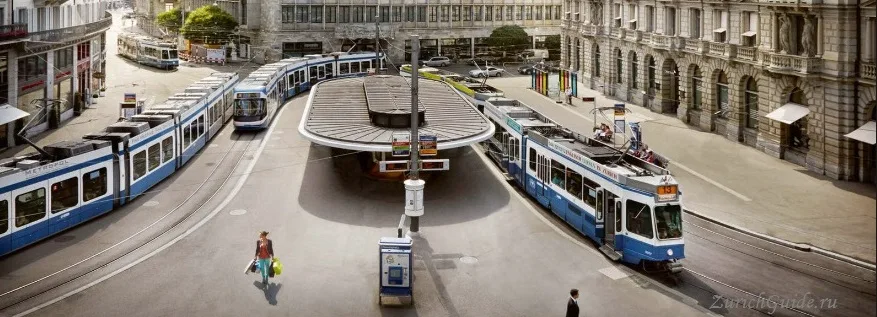
Zurich’s transport is the reason people write about Swiss transport. Trams every few minutes, plus buses, suburban trains, boats and two funiculars, all on one ticket and all to the minute.
- The centre is walkable. Main station to the lake is fifteen minutes on foot. You may need fewer tickets than you expect.
- Tickets. Zone 110 covers the city. Buy at the machine on any stop, or in the app before boarding. A short-hop ticket covers a few stops; a 24-hour pass costs about twice a single and pays off on the third journey.
- Inspection is real and the fine is heavy. Nobody checks as you board, which misleads visitors constantly.
- The airport is 10 minutes from the main station by train, several an hour. A taxi costs many times more and is no faster.
- Driving is unnecessary and parking is expensive. If you arrive with a car, leave it at the hotel.
The Zürich Card bundles transport with museum entry and some discounts, sold for 24 or 72 hours at the station and the airport. Worth it if you are doing two or more museums a day; otherwise a plain transport pass is cheaper.
What it costs
Zurich is expensive, and the shape of it surprises people: not the museums, which are moderate, but the everyday things. A coffee, a beer, an ordinary lunch — roughly double Berlin or Paris.
What helps:
- Supermarket food. Coop and Migros do good takeaway, and the branches inside the main station open late and on Sundays, when almost everything else is shut.
- Tap water. Excellent, and free from around 1,200 public fountains. Carry a bottle.
- Lunch menus. Restaurants that are painful in the evening serve a fixed lunch at a fraction of the price.
Day trips
Switzerland is small and the trains are fast, so a good deal of the country is a day trip:
- Rhine Falls — 50 minutes, the largest waterfall in Europe by volume
- Lucerne — 45 minutes, for the lake and the covered bridge
- Bern — an hour, for the UNESCO old town
- Interlaken and the Jungfrau region — two hours, and the start of the high mountains
When to go
June to September is the best of it: the lake is warm enough to swim, everything is open, and the city lives outdoors. December brings the Christmas markets and the lights along Bahnhofstrasse. April, May and October are quiet, cheaper and perfectly pleasant. January and February are grey and often stuck under low cloud — which is the month to take a train up a mountain and get above it.
One day in Zurich
A route on foot from the station to the lake and back over the hill, timed to fit a day, with the two places worth paying for.
A few hours in Zurich
Between two trains, or on a long layover: what you can actually see in two, three or four hours without hurrying.
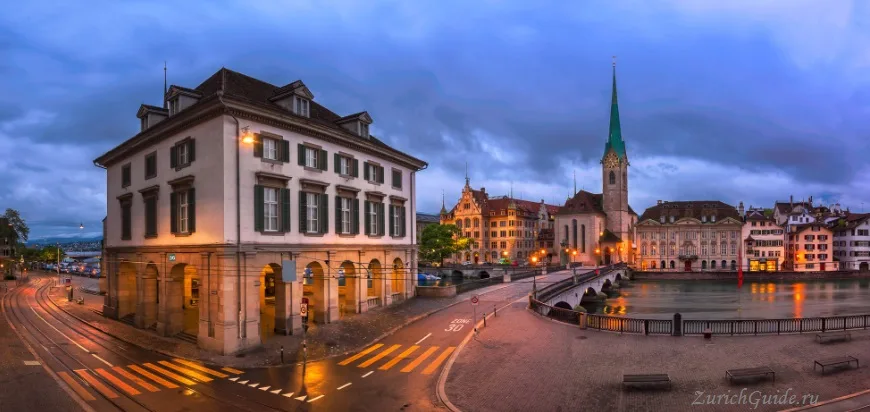
The churches of Zurich
Three towers make the skyline, and each is worth going into for one specific thing: Chagall's windows, a tower climb, and the largest clock face in Europe.
Museums in Zurich
Around fifty of them for a city of 440,000. These are the five that matter, and what each is actually good at.
From Zurich airport into the city
The train takes ten minutes and costs the price of a sandwich. Everything else is worse.
Getting around Zurich
One network, one ticket, and a tram every few minutes. What each mode is for, and when walking beats all of them.
Zurich transport tickets
One ticket covers trams, buses, trains and boats. Getting the zones right takes thirty seconds, and getting them wrong is expensive.
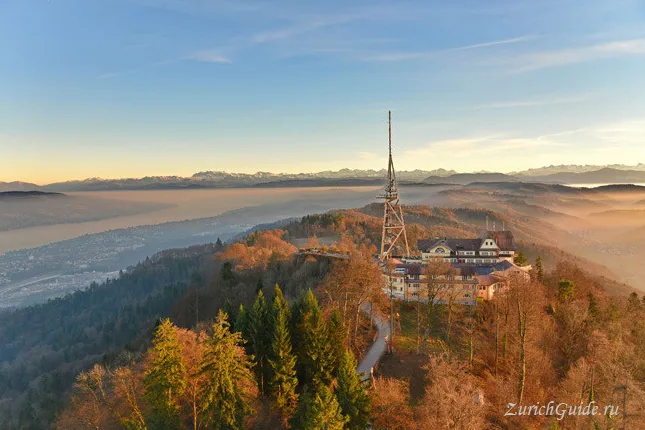
Uetliberg
870 metres, twenty-five minutes from the main station, and included in an ordinary city fare. The cheapest good view in Switzerland.
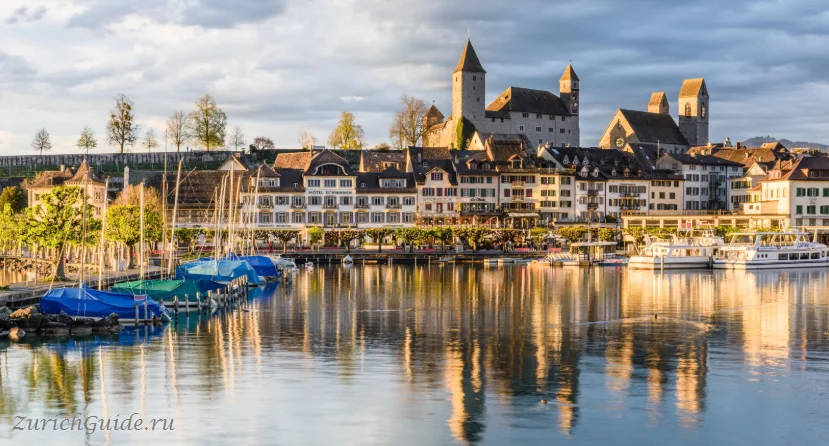
Around Zurich
Almost everything worth seeing in the country is a day trip from here. The ones under an hour, ranked.
Eating in Zurich
The city's own dish, the guild houses, the cheap options that are actually good, and the vegetarian restaurant that has been open since 1898.
Zurich streets and squares
Bahnhofstrasse, Lindenhof, Niederdorf, Schipfe, Paradeplatz and the rest, and why each is worth five minutes.
Zurich festivals and events
A snowman is blown up in April, a million people dance through the streets in August, and the lights go on along Bahnhofstrasse in November.
Zurich with children
A zoo with a rainforest hall, a hill on a city ticket, swimming in the river, and a science museum twenty-five minutes away for when it rains.
Parking in Zurich
The city caps the total number of parking spaces by law, prices them accordingly, and gives you a park-and-ride system instead.
Where to park in Zurich
| Car park | Spaces | Fee | From centre |
|---|---|---|---|
| Parkhaus Urania underground | 451 | paid | 40 m |
| Zähringerplatz | 20 | paid | 290 m |
| Jelmoli Parkhaus underground | 222 | paid | 340 m |
| City Parking underground | 620 | paid | 450 m |
| Parking Talgarten underground | 110 | paid | 490 m |
| Walcheplatz | — | paid | 490 m |
| Parkplatz USZ | 80 | paid | 710 m |
| Parkhaus Stauffacher Tor underground | 60 | paid | 780 m |
11 more are mapped nearby — see them on OpenStreetMap.
Data © OpenStreetMap contributors, ODbL licence, snapshot of 22 August 2026. The map is drawn by volunteers: the list is not complete, and a dash means “not recorded” — not “free” and not “no spaces”. This is not an official parking directory: when you get there, read the signs and the machine at the entrance.
Weather in Zurich month by month
| Month | Day | Night | Rainfall |
|---|---|---|---|
| January | +4° | -2° | 63 mm |
| February | +6° | -2° | 55 mm |
| March | +11° | +1° | 65 mm |
| April | +16° | +4° | 73 mm |
| May | +20° | +9° | 115 mm |
| June | +23° | +12° | 112 mm |
| July | +25° | +14° | 116 mm |
| August | +25° | +14° | 109 mm |
| September | +20° | +10° | 79 mm |
| October | +15° | +6° | 80 mm |
| November | +8° | +2° | 74 mm |
| December | +5° | -1° | 80 mm |
Normals for 1991–2020 from MeteoSwiss, station Zürich / Affoltern, open data, version of 29 July 2026. Day and night are the average daily high and low, not records; rainfall is approximate. Current conditions from the Norwegian Meteorological Institute, CC BY 4.0.
Updated: