Vevey
A lakeside town between the vineyards and Montreux, where Chaplin spent his last 25 years and a wine festival happens roughly once a generation.
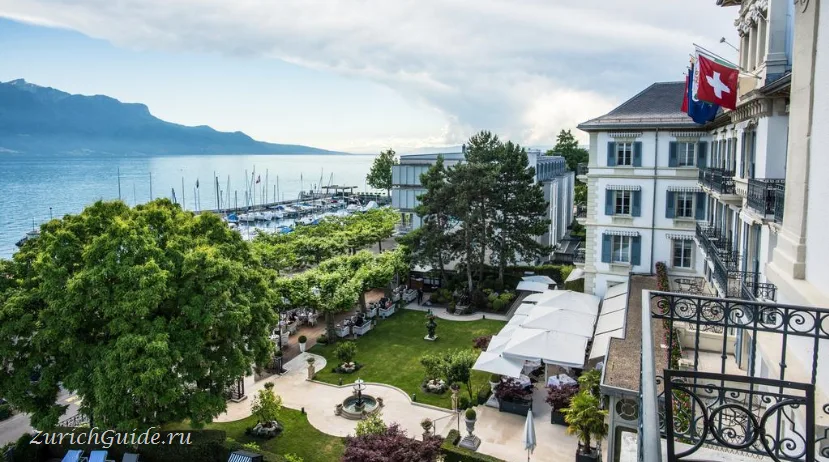
Vevey sits on Lake Geneva between the Lavaux vineyards and Montreux, and it is the more agreeable of the two lakeside towns — smaller, less resort-like, with a market square that opens straight onto the water.
It is also a company town in a way that is not obvious: Nestlé has been headquartered here since 1866, and much of the town’s twentieth-century prosperity came from it.
The place is older than that by two thousand years — a Roman foundation, then a trading post on the road from Piedmont to Burgundy, and all along the centre of the Lavaux wine country that climbs the slope behind it. Above the town, a funicular runs up Mont Pèlerin for the view down the whole lake.
The visitors who stayed
Vevey was where the Russian and English aristocracies came in the nineteenth century, and the list of people who lived, wrote or died here is out of all proportion to a town of 20,000.
From Russia: Vyazemsky, Karamzin, Dostoevsky, Tchaikovsky, and later Nabokov, who is buried up the lake at Clarens. The Orthodox church of St Barbara was built in 1878 with money from Count Shuvalov and still stands above the town.
From elsewhere: Henry James, Victor Hugo, Oskar Kokoschka — whose work fills the Musée Jenisch — and the Polish novelist Henryk Sienkiewicz, who died here. And Chaplin, below.
The tourist office hands out a free booklet tracing the Hemingway trail through the town, which takes in most of the addresses above along the way.
Chaplin
Charlie Chaplin left the United States in 1952 during the McCarthy period, settled in the Manoir de Ban above Vevey, and lived there for the last 25 years of his life. He is buried in the churchyard at Corsier.
Chaplin’s World, in the house and a purpose-built studio beside it, opened in 2016. The house is kept as the family lived in it; the studio building recreates sets from the films and is aimed at people who have seen them. It is one of the better-made museums of its kind in Switzerland.
There is a statue of him on the lakefront, looking out over the water.
The town
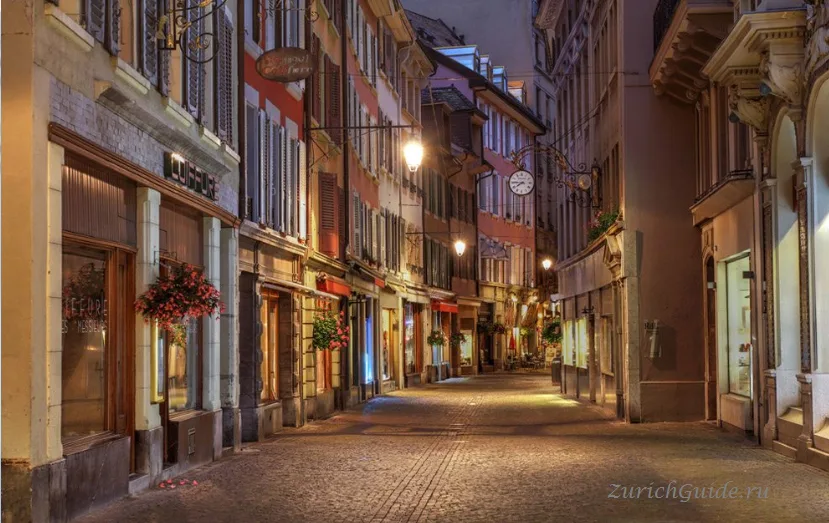
Place du Marché is the largest market square in Switzerland and opens directly onto the lake, which is unusual and very pleasant. The market is on Tuesday and Saturday mornings, and from July to August the Saint-Martin wine stalls set up on Fridays and Saturdays — you buy a glass and wander.
The Alimentarium, in the old Nestlé building, is a museum of food and eating, which sounds corporate and is not. Outside it stands the town’s other landmark: an eight-metre stainless steel fork, planted in the lake in 1995 as a temporary joke and kept because everyone liked it.
The Musée Jenisch holds the largest collection of Kokoschka outside Vienna and a very good print room.
The Fête des Vignerons
Vevey’s great oddity, and worth knowing about even though you will probably never see it.
The winegrowers’ festival is held roughly once every twenty years — the last in 2019, before that 1999 — in a purpose-built arena erected in the market square for the occasion and dismantled afterwards. It runs for three weeks, involves several thousand performers, and celebrates the work of the vineyard.
It has been held since 1797, it is on the UNESCO intangible heritage list, and most people who live here see it three or four times in a lifetime.
Getting there
- By train — Lausanne 15 minutes, Montreux 5 minutes, Geneva 50 minutes.
- By boat — the lake steamers call here.
- On foot — the Lavaux terraces begin at the western edge of the town, and the walk to St-Saphorin along the vineyards is a good two hours.
Nearby
- Lavaux — immediately west
- Montreux and Chillon — five and fifteen minutes east
- Mont Pèlerin — a funicular up the hill behind for the view over the whole lake
- Gruyères and Broc — over the hills to the north, with the chocolate factory on the way
When to go
May, June and September. July and August bring the jazz crowds to Montreux next door and prices follow. The Christmas market is small and good.
Where to park in Vevey
| Car park | Spaces | Fee | From centre |
|---|---|---|---|
| Place du Marché | — | paid | 70 m |
| Place de la Gare | — | paid | 290 m |
| Poste | 27 | paid | 340 m |
| Place Saint-Jean | — | paid | 450 m |
| Place Sainte-Claire | — | paid | 510 m |
| Cour aux Marchandises | — | paid | 710 m |
| Entre-deux-Villes | 39 | paid | 880 m |
| Piscine | 45 | paid | 1.1 km |
Data © OpenStreetMap contributors, ODbL licence, snapshot of 22 August 2026. The map is drawn by volunteers: the list is not complete, and a dash means “not recorded” — not “free” and not “no spaces”. This is not an official parking directory: when you get there, read the signs and the machine at the entrance.
Weather in Vevey month by month
| Month | Day | Night | Rainfall |
|---|---|---|---|
| January | +5° | -2° | 68 mm |
| February | +7° | -2° | 58 mm |
| March | +11° | +2° | 63 mm |
| April | +16° | +4° | 65 mm |
| May | +19° | +9° | 94 mm |
| June | +23° | +12° | 96 mm |
| July | +25° | +14° | 118 mm |
| August | +25° | +14° | 110 mm |
| September | +20° | +10° | 80 mm |
| October | +15° | +6° | 77 mm |
| November | +10° | +2° | 75 mm |
| December | +6° | -1° | 80 mm |
Normals for 1991–2020 from MeteoSwiss, station Aigle, open data, version of 29 July 2026. Day and night are the average daily high and low, not records; rainfall is approximate. Current conditions from the Norwegian Meteorological Institute, CC BY 4.0.
Updated: