The ten most beautiful towns in Switzerland
Not the most visited — the most worth looking at. A personal list, in order, from someone who lives here.
The most popular towns in Switzerland are not the most beautiful ones. Popularity is measured in visitor numbers, and visitor numbers follow ski lifts, conference centres and airports as much as they follow architecture.
This is a different list: chosen for the old town, the setting, and the amount of the country’s character concentrated in one place. It is a personal ranking, and it is meant as a route-planning tool — take it with what there is to do and you have a first trip.
1. Lucerne
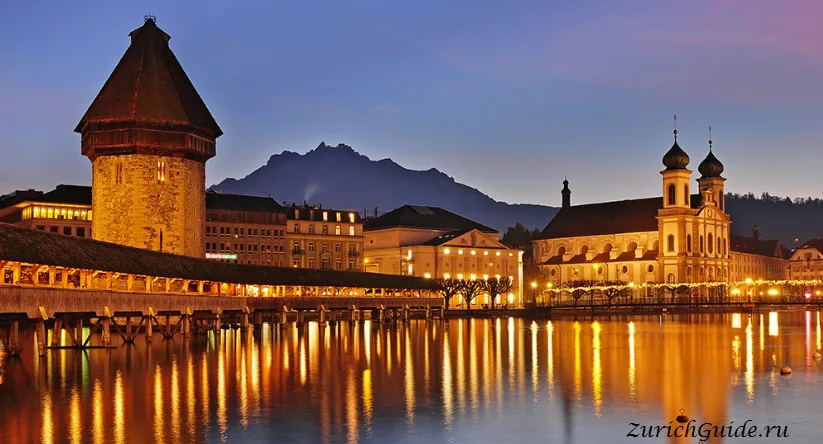
The best-looking town in the country, and it knows it.
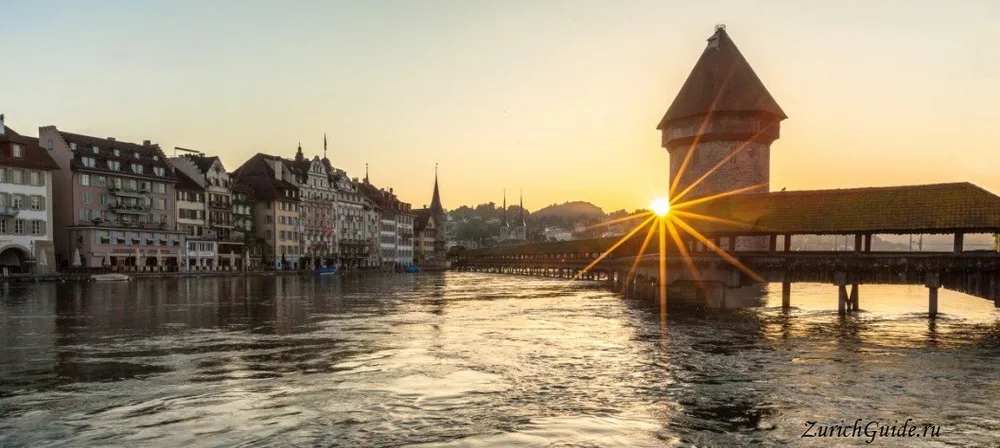
The Kapellbrücke is the point: a covered wooden bridge from the fourteenth century crossing the Reuss at an angle, with painted panels under the roof and a stone water tower beside it, and the serrated ridge of Pilatus standing behind. It is the most photographed structure in Switzerland and it deserves to be.
Behind it is a painted old town, a lake that runs deep into the mountains, and the Lion Monument — a dying lion carved into a rock face in memory of the Swiss Guards killed in Paris in 1792. Mark Twain called it the saddest piece of stone in the world, and he was not wrong.
2. Zurich
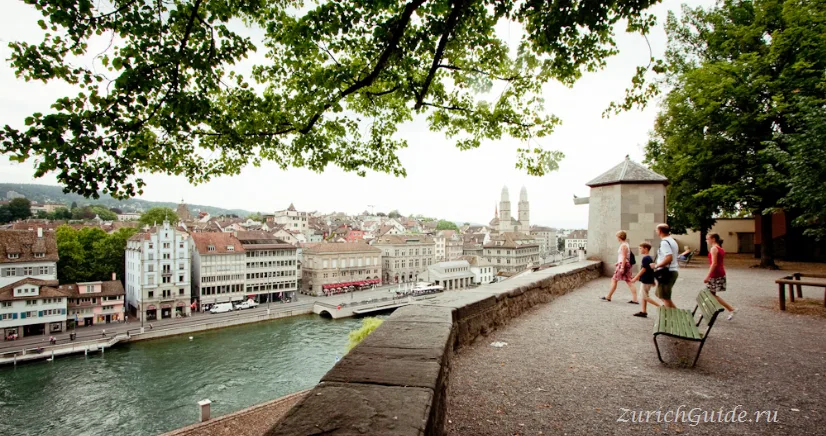
Declared with a conflict of interest: this site is named after it.
But the case stands. Medieval houses that go back to the thirteenth century; the Lindenhof terrace above the river, with the towers of the Grossmünster and Fraumünster on one side and the lake and the Alps at the far end; and the Schipfe, a lane of craft workshops under the hill that stays shaded and quiet in the middle of a July afternoon. See the Zurich guide.
3. Stein am Rhein
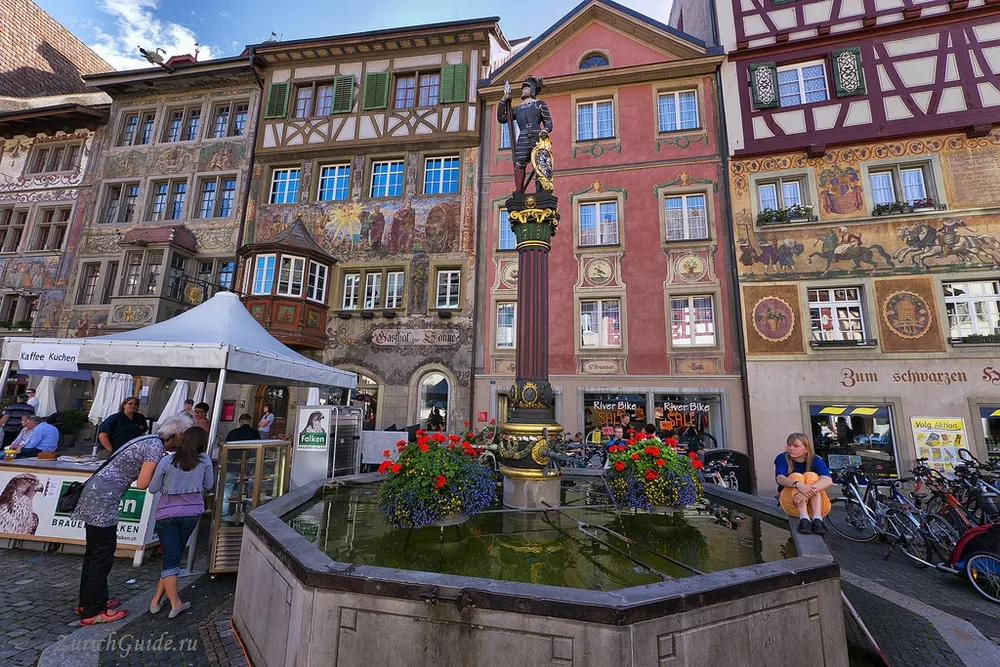
A very small town on the Rhine near Lake Constance, and the most decorated place in Switzerland: the houses on the Rathausplatz are painted end to end with sixteenth-century frescoes, scene over scene, with oriel windows projecting between them.
It is a twenty-minute detour from Schaffhausen and the Rhine Falls. Come at Christmas if you can, when a lit tree stands in the middle of it and the whole square looks staged.
4. Thun
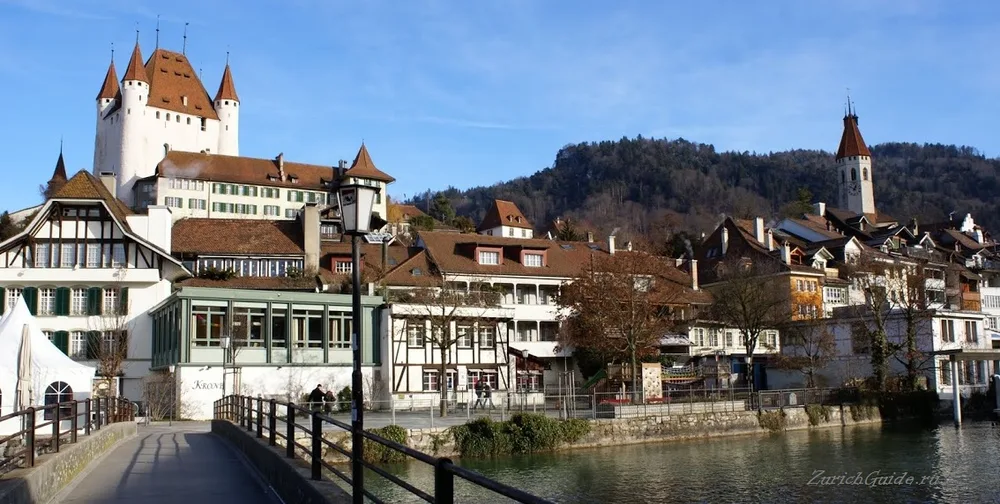
A medieval town on its own lake, south-east of Bern, with a castle straight out of a picture book standing over it — four round towers, twelfth century, now a museum.
Thun’s oddity is the Obere Hauptgasse: the shops have their pavement on the roofs of the shops below, so the main street runs on two levels and you walk along the shopfronts one storey up. There is nowhere else like it.
5. Bern
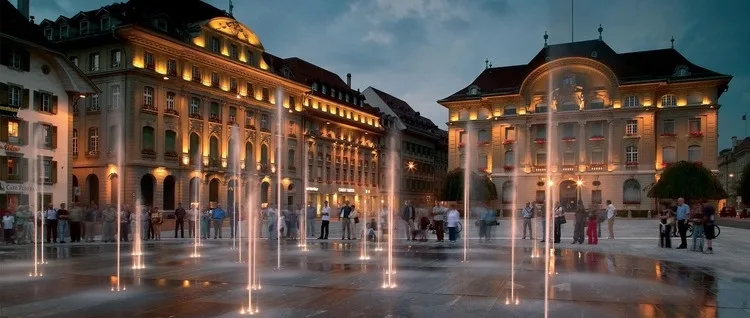
The seat of government, and the architecture is duly orderly: grey sandstone, straight arcades, a clock tower for a landmark.
But the whole old town is UNESCO-listed, and for good reason — six kilometres of covered arcades, the longest run of them in Europe, and a river bend of green glacial water with high bridges over it. In summer the fountains run and the windows fill with red geraniums, and Bern stops looking like a ministry.
The Aare is clean enough and fast enough that locals float down it on summer afternoons and climb out at the Marzili baths.
6. Gruyères
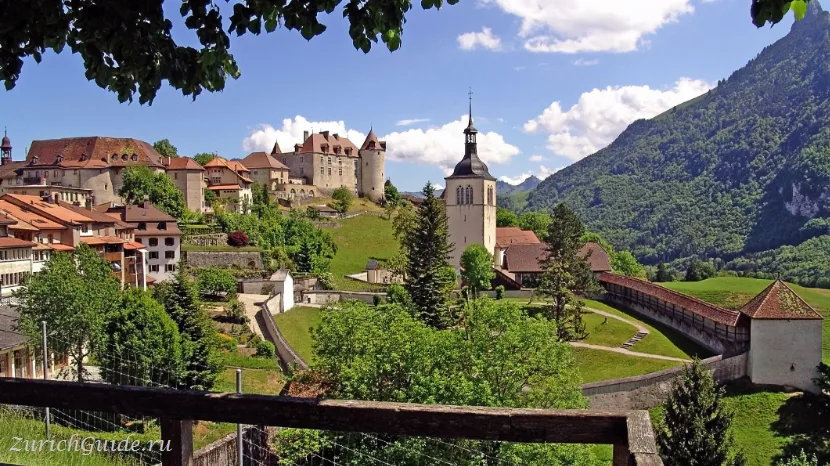
A single cobbled street on a hilltop in French-speaking Switzerland, with the counts’ castle at the top and mountains on every side. No cars.
The cheese is the reason most people come, and the dairy at the bottom of the hill shows how it is made. Then there is the incongruous other half: H. R. Giger, who designed the creature in Alien, put his museum in a medieval building here, with a bar to match. Fondue and biomechanical nightmares within fifty metres of each other is a very Swiss juxtaposition.
7. Appenzell
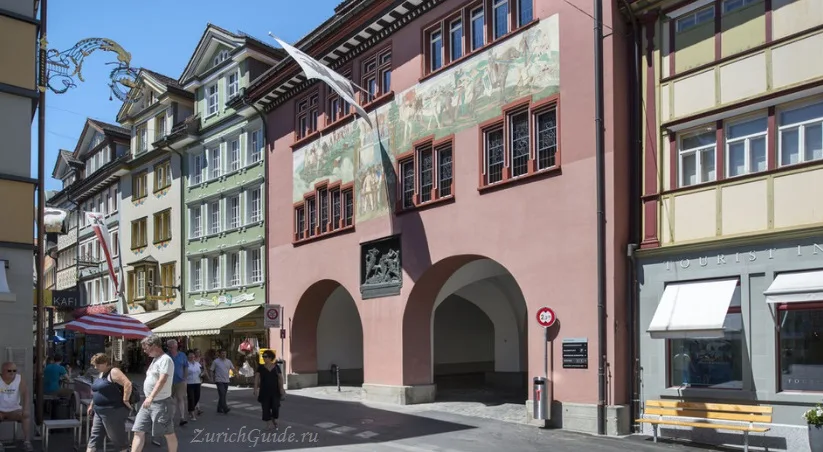
The capital of one of the most traditional cantons in the country, and the place to go to see the Switzerland of dairy farmers rather than bankers.
The houses on the main street are painted in strong colours with signs and figures across the fronts. And once a year, on the last Sunday in April, the citizens gather in the square and vote by raising their hands — the Landsgemeinde, open-air direct democracy, still binding, still real.
Appenzell also brews its own beer and makes a famously pungent cheese. Have both.
8. Zermatt
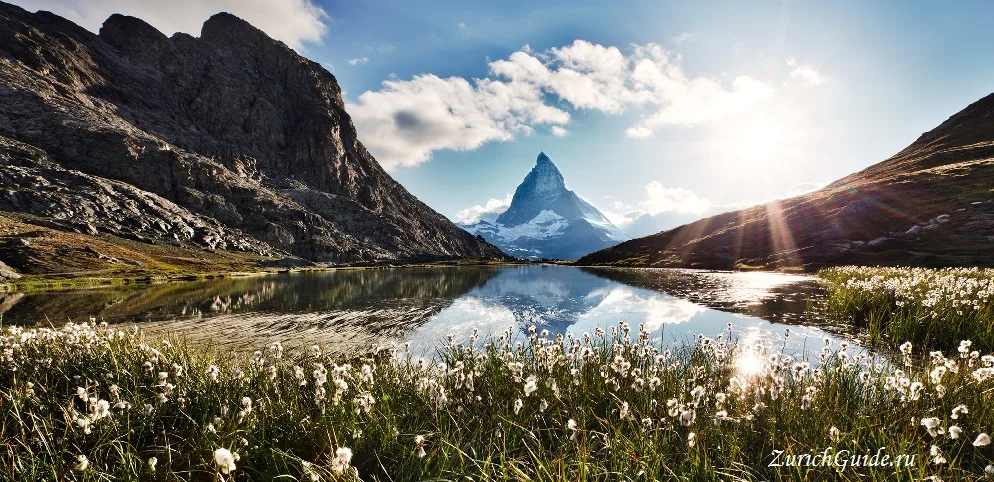
Frankly touristy: a town made almost entirely of hotels, with crowds that never quite disappear.
It earns its place anyway. It is car-free — you arrive by train and everything inside runs on electric carts — and the old quarter still has its dark timber granaries raised on stone stilts with flat discs on top to keep the mice out. And there is the Matterhorn, which is at the end of the main street, and which does not disappoint.
9. Fribourg
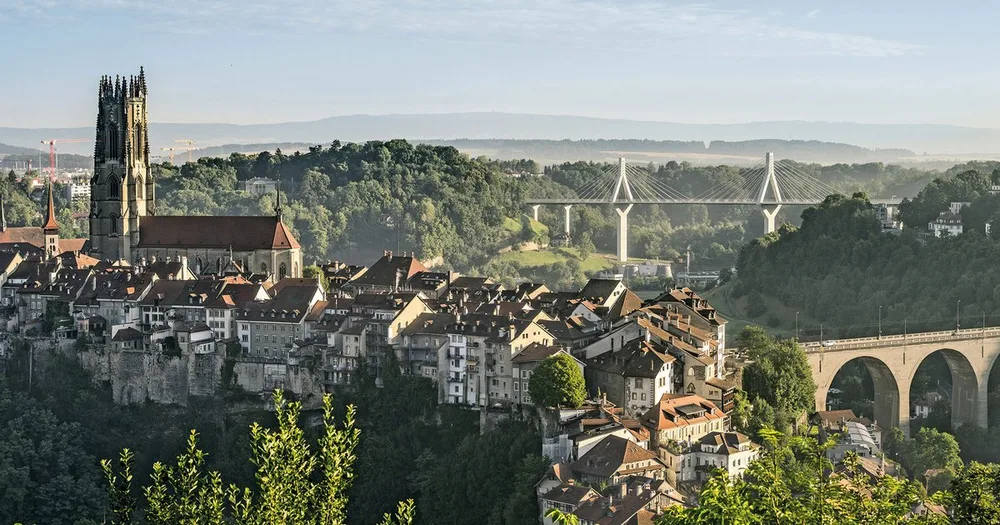
A bilingual city where the language border runs through the middle of town, along the river: German on one bank, French on the other, and plenty of people who switch without noticing.
The old town is stone rather than painted, and it falls steeply to a loop of the Sarine in a way few Swiss towns do. High bridges cross the gorge, the Gothic cathedral tower stands over everything, and a funicular counterweighted with waste water still climbs from the lower town.
10. Schaffhausen
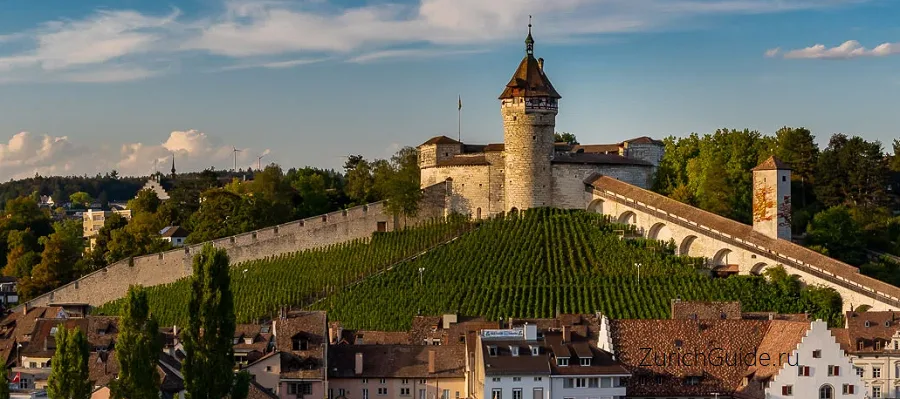
The capital of the northernmost canton, on the German border. It loses on painted houses to Stein am Rhein up the river, but it has a few good ones, and over the whole town stands the Munot — a circular sixteenth-century fortress with a vineyard on its slope and a keeper who still rings the bell at nine every evening.
Half an hour’s walk away is the Rhine Falls, the largest waterfall in Europe by volume, which is reason enough on its own.
Planning a route around these
They divide neatly by region:
- North-east, from Zurich: Schaffhausen and Stein am Rhein in one day, Appenzell in another
- Centre: Lucerne, then Bern and Thun together
- West: Fribourg and Gruyères in a day from Bern or Geneva
- South: Zermatt, which needs two days and clear weather to be worth it
All of them are on the railway. None needs a car.
Updated: