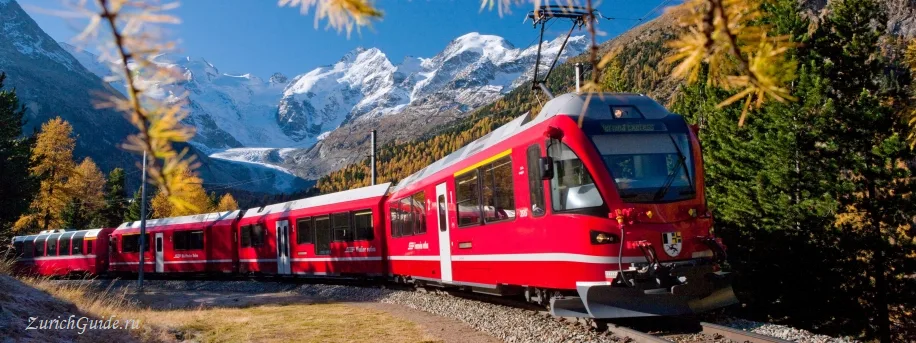
The panoramic trains
Four scenic routes, what each one actually shows you, and the thing nobody tells you: the ordinary trains run the same track for a fraction of the price.
Switzerland’s scenic railways are the country’s other great attraction, and they are a genuinely good way to spend a wet day — you see the mountains from a warm seat and nobody has to walk anywhere.
Before the list, the one thing that saves the most money.
The trick: the same track, without the branding
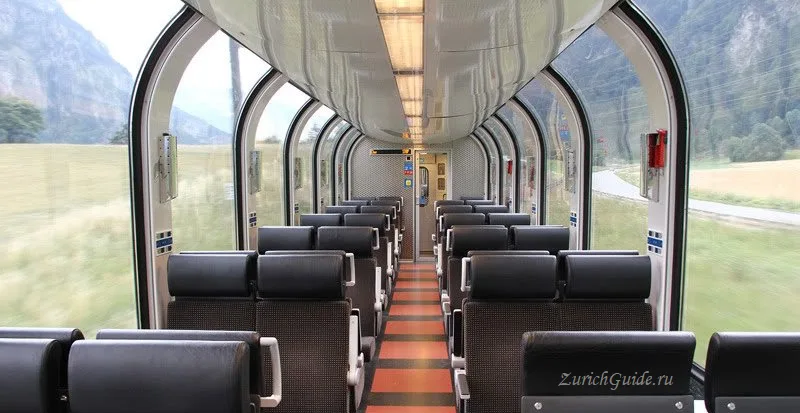
A panoramic train is a normal train with better windows and a reservation fee. The Glacier Express, the Bernina Express and the rest run on ordinary public track, and the ordinary regional service covers the same route, all day, at standard fares with no reservation at all.
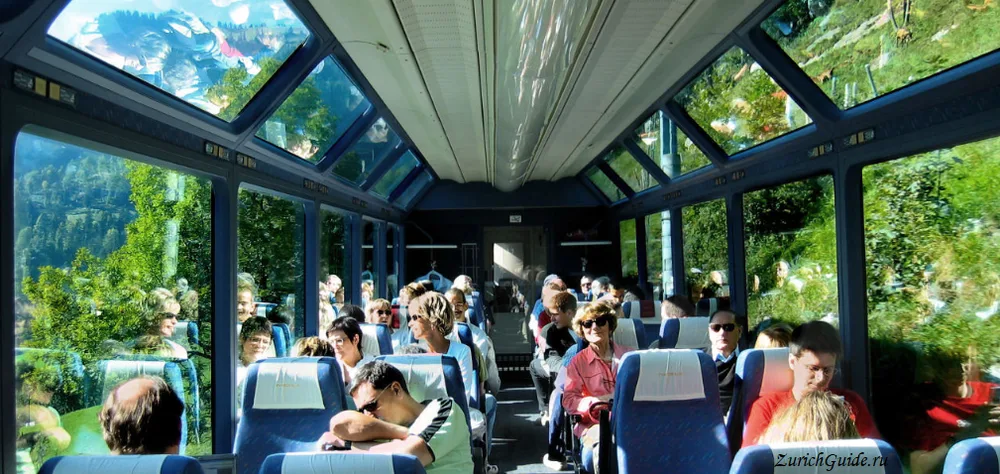
What you give up: the curved roof glass, the on-board commentary, the meal at your seat, and a guaranteed window seat.
What you gain: a fraction of the cost, the freedom to break the journey wherever you like, and windows that open — which matters if you want to photograph anything, because the panoramic glazing reflects and tints.
If you hold a Swiss Travel Pass or a day pass, the ride itself is already covered on both, and the only difference is the reservation charge on the branded train.
Do the branded train for the experience; take the regional service if you want the scenery on a budget or with stops.
Glacier Express
St. Moritz — Zermatt, about eight hours.
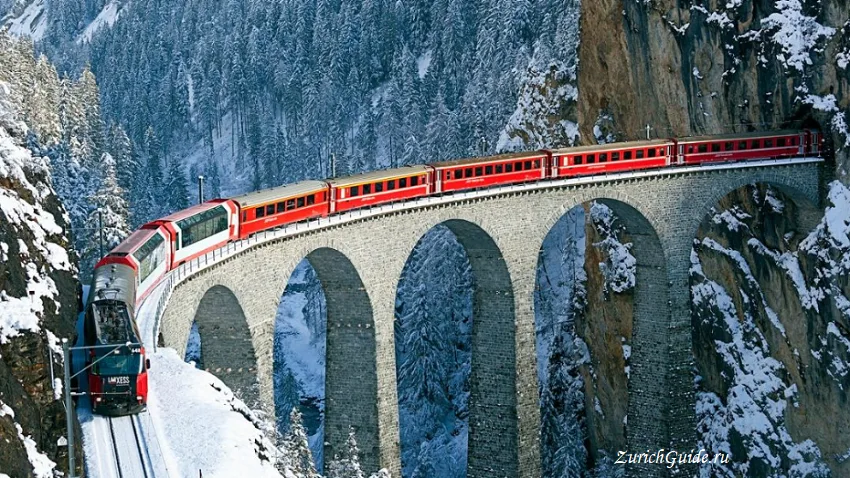
Advertised, accurately, as the slowest express train in the world. It crosses the country from the Engadin to the Matterhorn: 291 bridges, 91 tunnels, and the Oberalp Pass at 2,033 m.
The best of it is the eastern half — the Albula line between St. Moritz and Chur, with its spiral tunnels and the Landwasser viaduct, which is UNESCO-listed. If you only have half a day, do that section on a regional train and skip the rest.
Reservation is compulsory on the branded service, and the summer departures book out weeks ahead. Lunch is served at the seat and is priced accordingly.
Bernina Express
Chur or St. Moritz — Tirano, about four hours, and the best of the lot.
It crosses the Alps from north to south, from glaciers to palm trees, and it is the highest transalpine railway crossing that works without a rack — the Bernina Pass at 2,253 m, climbed on adhesion alone at gradients of up to seven per cent. The Albula and Bernina lines together are UNESCO World Heritage.
The southern end is the surprise: the train comes down into Tirano in Italy, where it runs along the street among the cars, and there is a connecting bus on to Lugano.
An hour of it — the Brusio circular viaduct, where the line loops over itself in the open — is the single most photographed piece of railway in the country.
GoldenPass
Lucerne — Interlaken — Zweisimmen — Montreux, about five and a half hours in total.
Three railways stitched together, and the one that shows you the most variety: Lake Lucerne, the Brünig pass, Interlaken between its two lakes, the chalets and pastures of the Simmental, and then a drop through the vineyards to Montreux on Lake Geneva. German-speaking Switzerland at one end, French at the other.
Since 2022 a direct through-service runs Interlaken to Montreux with a gauge-changing bogie — a piece of engineering Switzerland spent decades on, and which removes the old change at Zweisimmen.
Gotthard Panorama Express
Lucerne — Lugano, about five and a half hours, and unusual in that half of it is on water.
You start with a paddle steamer across Lake Lucerne to Flüelen, then take the train over the old Gotthard route — the historic line with its spiral tunnels, not the modern base tunnel underneath — and come out in the Italian-speaking south.
It was called the Wilhelm Tell Express until 2017, and you will still find it under that name in older guides and on older maps. Same route, new name.
Voralpen Express
St. Gallen — Lucerne, about two and a quarter hours.
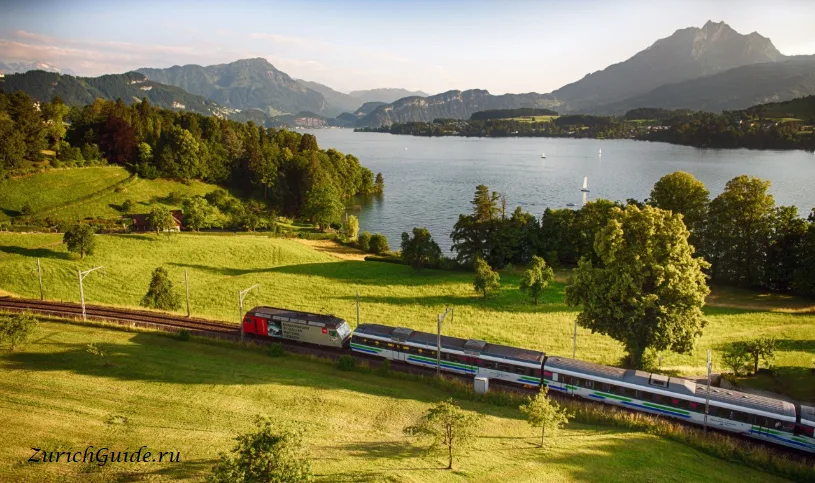
The one nobody outside Switzerland has heard of, and the best value on this page: no reservation, no supplement, an ordinary intercity fare. It runs across the pre-Alps between Lake Constance and Lake Lucerne over high viaducts, past Rapperswil and along the Zürichsee.
If you want a scenic Swiss rail journey and do not want to plan or pay, take this one.
Grand Train Tour
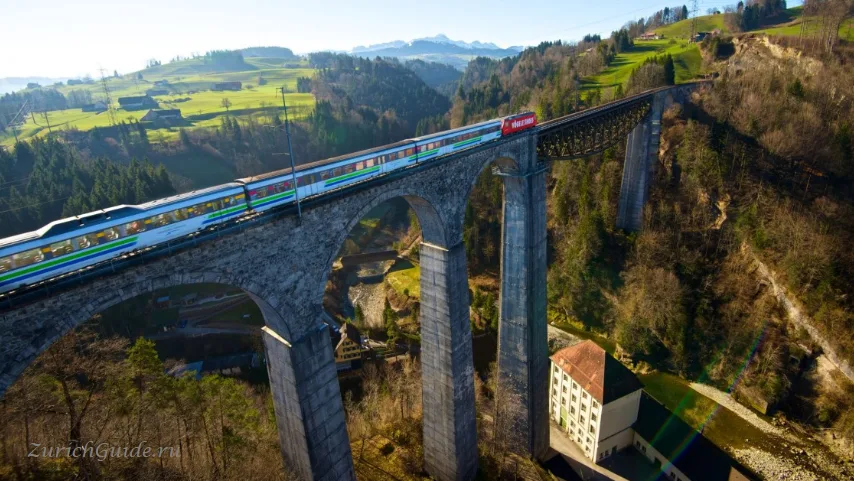
The tourist board strings the scenic routes into a Grand Train Tour of Switzerland, a circuit of about 1,280 km that you can ride in any direction, breaking it wherever you like. There is no special train and no special ticket: it is a suggested itinerary on the ordinary network, and a Swiss Travel Pass covers it.
A typical eight-day version: Zurich, then Interlaken, then Montreux via the GoldenPass, then Zermatt, then the Glacier Express to St. Moritz, the Bernina Express to Lugano, the Gotthard Panorama Express to Lucerne, and home.
You do not have to do the whole thing. Two or three legs give you most of the scenery without a week on a train.
Practical
- Reserve on Glacier Express, Bernina Express and GoldenPass in summer. The others do not need it.
- Sit on the correct side. For the Bernina Express heading south, the right; for the Glacier Express, it changes with the section, and the staff will tell you.
- Panoramic glass does not open, and it reflects. Serious photographers ride the regional trains.
- Fares and timetables change yearly. Check sbb.ch or rhb.ch, not a page like this.
More on getting around in practical, and on where these trains go in Switzerland.
Updated: